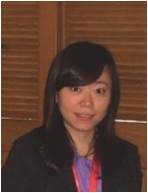
ZHANG Jingjing
Professor
Associate Dean, Faculty of Education, Beijing Normal University, Beijing, China
School of Educational Technology
Email:jingjing.zhang@bnu.edu.cn
Address:
ZHANG Jingjing received her BSc in Computer Science from BNU, an MRes from University College London (UCL), an MSc and a DPhil from the University of Oxford. As an undergraduate, she was awarded 2003 AIEJ Scholarship for a one-year exchange study at Tokyo Gakugei University. At Oxford (MSc, DPhil), she was a Clarendon scholar and a member of Brasenose College (funded by ORS scholarship).
TEACHING & RESEARCH EXPERIENCE
Courses
1.Introduction to Educational Research Methods, International MA in Comparative Education (Education Management and Leadership)
2.Introduction of the Learning Sciences, BA in Educational Technology
3.Specialized English, MEng in Internet Plus Education
Research Experience
Jingjing Zhang is a Professor of Educational Technology at Beijing Normal University, currently serving as Associate Dean of the Faculty of Education. She is Vice Chair of the Chinese Learning Sciences Research Association.
She was selected for the National Major Talent Programme and awarded the Second Prize of the Fok Ying Tung Young Scientists Award and the Zhongying Young Scholar Award. She previously served (secondment) as Deputy Director of the Division of Research and Evaluation at the Beijing Education Examinations Authority.
Her course Introduction to the Learning Sciences has been recognized as a National First-Class Blended (Online-Offline) Undergraduate Course.
She has published over 100 academic works, including more than 30 SSCI journal articles and over 40 CSSCI articles, authored one English monograph, and presented over 40 international conference papers. She has led 2 national-level and 4 provincial/ministerial-level research projects.
Adopting interdisciplinary and internationally collaborative innovation pathways, she has established Memoranda of Understanding with eleven world-class universities, including Harvard University, MIT, Oxford University, and the University of Sydney, promoting educational research innovation and global talent cultivation.
Her research focuses on learning sciences, AIED, and educational big data. From a dynamic perspective, she investigates the evolving mechanisms of learning interaction to construct open, flexible, and AI-assisted learning environments.
She independently developed the SAxLearning Intelligent Interactive Learning Platform, which has been implemented at scale in general education reform at Beijing Normal University and adopted by several overseas universities, including Cornell University, contributing a “Higher Education × Artificial Intelligence” model from China.
SELECTED PUBLICATIONS
Books and Translated Works
1.Zhang, J., Technology, Research and Professional Learning, Springer, 2018
Journal Articles
1.Niu, X., & Zhang, J. (2026). Enhancing automated text coding in online learning research: A systematic calibration framework for large language models. IEEE Transactions on Learning Technologies.
2.Zhang, J., Huang, Y., Wu, F., Kan, W., & Zhu, X. (2025). Scaling up online professional development through institution-initiated blended learning programs in higher education. The Internet and Higher Education, 65, 100988.
3.Xiang, M., Zhang, J., & Li, Y. (2025). Examining the dynamics of knowledge convergence in online learning contexts: A network perspective. Computers & Education, 227, 105222.
4.Liu, Y., Zhang, J., Yang, Y., & Tao, X. (2025). The untapped promise of educational data on social media: A machine learning approach to unveiling online learners. Innovations in Education and Teaching International.
5.Niu, X., & Zhang, J. (2025). Knowledge diffusion and convergence in open learning environments as a social contagion. Interactive Learning Environments, 33(2), 1101–1117.
6.Cao, L., & Zhang, J. (2024). Exploring the use of productive failure to learn ecology in a virtual world. Interactive Learning Environments.
7.Niu, X., Chen, W., Li, L., Zhang, W., Gao, S., He, C., & Zhang, J. (2024). Achievement goal motivation and metacognitive skills in online social annotations. Innovations in Education and Teaching International.
8.Zhang, J., Huang, Y., & Yu, B. (2023). Learning design patterns of K12 synchronous language teaching. Interactive Learning Environments.
9.Gao, M., Zhang, J., Lu, Y., Kahn, K., & Winters, N. (2023). Grit and sequential learning behaviours in Snap!. Journal of Computer Assisted Learning, 39(2), 603–616.
10.Tlili, A., Ofosu, S., & Zhang, J. (2023). Pedagogical beliefs and OER use in Ghana. Interactive Learning Environments, 31(5), 2665–2677.
11.Xu, K. M., et al., & Zhang, J. (2023). Cross-cultural investigation on perseverance and self-regulated learning. Compare: A Journal of Comparative and International Education, 53(3), 361–379.
12.Shao, Y., Zhang, J., Costello, E., & Brown, M. (2023). Public perceptions towards MOOCs on social media. Interactive Learning Environments, 31(2), 670–682.
13.Zeng, S., Zhang, J., Gao, M., & Xu, K. M. (2022). Collective attention in language MOOCs. Computer Assisted Language Learning.
14.Zhang, J., Yang, Y., Barbera, E., & Lu, Y. (2022). Interdisciplinary knowledge in MOOC offerings. International Review of Research in Open and Distributed Learning, 23(2).
15.Gómez-Rey, P., et al., & Zhang, J. (2021). Life skills evaluation tool for online learning. Educational Technology Research and Development, 69, 3029–3049.
16.Zhang, J., Gao, M., & Zhang, J. (2021). Learning behaviours of dropouts in MOOCs. Computers & Education, 167.
17.Zhang, J., Gao, M., Holmes, W., Mavrikis, M., & Ma, N. (2021). Interaction patterns in exploratory mathematics learning. Interactive Learning Environments, 29(7), 1211–1228.
18.Tlili, A., Zhang, J., et al. (2021). Emerging technologies and OER. Educational Technology Research and Development, 69, 515–532.
19.Zhang, J., Burgos, D., & Dawson, S. (2019). Learning analytics in open and distance learning. Distance Education, 40(1), 302–308.
20.Jiang, F., Wang, L., Zhang, J., et al. (2019). Mapping STEM education. International Journal of Engineering Education.
21.Holmes, W., Nguyena, Q., Zhang, J., et al. (2019). Learning analytics for learning design. Distance Education.
22.Zhang, J., Sziegat, H., Perris, K., & Zhou, C. (2019). MOOCs and changes in Chinese higher education. Learning, Media and Technology, 44(2), 108–123.
24.Lu, Y., Zhang, J., et al. (2019). Wearable devices and learner engagement. IEEE Access, 7, 15749–15757.
25.Costello, E., Brown, M., et al., & Zhang, J. (2018). Twitter and MOOCs. International Journal of Educational Technology in Higher Education, 15(1), 44.
26.Lu, Y., et al., & Zhang, J. (2018). Intelligent taxi service system. AI Communications.
27.Gregori, E. B., Zhang, J., et al. (2018). Learner support in MOOCs. Computers & Education, 122, 153–168.
28.Li, S., Zhang, J., et al. (2017). Distance tutoring in e-learning. International Review of Research in Open and Distributed Learning, 18(2), 189–212.
30.Zhang, J., Perris, K., Zheng, Q., & Chen, L. (2015). Public response to MOOCs in China. International Review of Research in Open and Distributed Learning, 16(5), 144–160.
31.Skryabin, M., Zhang, J., et al. (2015). ICT development and student achievement. Computers & Education, 85, 49–58.
32.Macfarlane, B., Zhang, J., & Pun, A. (2014). Academic integrity. Studies in Higher Education, 39(2), 339–358.
Book Chapters
1.Zhang, J., China Commentary, in Open and Distance Education in Asia, Africa and the Middle East, Springer, 2019
2.Zhang, J., The Restriction of Degree: Reform of Public School Management Models, in New Media, Knowledge Practices and Multiliteracies (pp. 103-114). Springer, Singapore. 2015
3.Zhang, J., Electronic Research Collaboration via Access Grid, in Cultural, Behavioral, and Social Considerations in Electronic Collaboration, Business Science Reference, 2016
SELECTED RESEARCH PROJECTS
1.PI, Collective Attention in Online Education, funded by the Chinese National Natural Science Foundation, 2019-2022
2.PI, Proximity Effect in Online Education: Modeling the Course Space and the Complexity Ranking of MOOC Offerings, funded by the Beijing Municipal Education Science Foundation for 12th Five-Year Plan, 2019-2022
3.PI,Centre for Learning Analytics in Online Learning,2018- 2021
4.PI, Big Data Centre for Technology-mediated Education, funded by the Beijing Normal University, 2015-2018
5.PI, An Experimental Study on Contextual Learning: Reconstructing the Forms of Hypertexts of OER, funded by the National Education Science Foundation, 2013-2016
6.PI, Open Educational Resources: Understanding Open Standards & Licenses, funded by the Beijing Municipal Education Science Foundation for 12th Five-Year Plan, 2012-2015
7. PI, Sharing Mechanism of Open Education Resources: Innovation for Open Standards & Licenses, funded by the Beijing Normal University Science Foundation, 2012-2013
SELECTED ACADEMIC PRESENTATIONS
1.Jiang, H., Kou, Y., & Zhang, J. (2025). Supporting knowledge generation in large-scale online courses. ICETC 2025.
2.Xiang, M., Zhang, J., Saqr, M., et al. (2025). Temporal dynamics of learner interactions in MOOCs. LAK 2025.
3.Law, N., Ko, P., Zhang, J., et al. (2024). Learning design tools and teacher participation. ICLS 2024.
4.Xiang, M., Zhang, J., & Li, Y. (2024). Knowledge convergence in cross-cultural contexts. LAK 2024.
16.Shum, S., Mayles, K., Dawson, S., Zhang, J., et al. (2016). Institutional learning analytics centres. LAK 2016.
17.Zhang, J., Perris, K., Zheng, Q., & Chen, L. (2015). Mining microblogging data to assess public response to MOOCs. ICDE 2015.
18.Zhang, J. (2015). Understanding social learning in MOOC forums. BeSeTo Symposium.
19.Zhang, J., & Skryabin, M. (2015). Exploring forum dynamics in a Chinese MOOC. ICCE 2015.
20.Tang, Q., & Zhang, J. (2013). Value of face-to-face tutorials. ICDE World Conference.
21.Xu, L., Zhang, J., & Zheng, Q. (2013). Chinese OER research development. ICTE Conference.
22.Zhang, J. (2011). Trust at a distance: The key to distributed research. ICDE 2011.
23.Zhang, J., McAlpine, L., Mills, D., et al. (2010). The next generation of social scientists. SRHE Annual Conference.
24.Zhang, J., Lotto, B., Bergstrom, I., et al. (2009). Visualised sound simulation environment. HCI International 2009, San Diego.
25.Zhang, J. (2008). International research collaboration at a distance. UNESCO Global Research Seminar, Paris.
26.Zhang, J., Morita, T., Konya, H., et al. (2004). A seamless course selection system based on visualisation. ICCE 2004.
27.Zhang, J., Morita, T., Inoue, T., Yokoyama, S., & Miyadera, Y. (2004). A visualisation system of relationships among courses. ICCE 2004, Melbourne.
SERVICE & CONSULTING
1.Guest Editor, Special Issue, Journal of Distance Education (SSCI)
2.International Advisory Board, Research Institute for Innovation & Technology in Education, International University of Rioja
3.Academic Members, Center for Open Education Research, University of Oldenburg
4.Editorial Board Members, Journal of Communication and Education (JCE)
5.Editorial Board Members / Reviewers, International Programme Committee, Hong Kong Association for Educational Communications and Technology International Conference, 2014
6.Editorial Board Members / Reviewers, Programme Committee, 11th World Conference on Mobile and Contextual Learning (mLearn 2012)
8.Observer, Global Policy Forum on Learning, University of Hong Kong, 2011 Conference Coordinator, 10th World Conference on Mobile and Contextual Learning (mLearn 2011)
HONORS & AWARDS
1.Chung-ying young scholars
Copyright @ Faculty of Education Beijing Normal University. All rights reserved.
Yingdong Buidling, Beijing Normal University 技术支持:北京师科阳光信息技术有限公司
Email:jiaoyuxuebu@bnu.edu.cn